Sara walks into the kitchen and sees her brother making coffee. "I have just made some," he says. She opens the fridge: "Have you bought milk yet?" "I've already bought some." Two small words, and each one tells you something different about when.
Just, already, and yet work with the present perfect to connect a past action to right now. The core idea is simple: already tells you something has happened. Yet tells you something hasn't happened, or asks if it has. Just tells you something happened a very short time ago.
You use the present perfect: have or has + past participle. The adverb goes in a fixed position in the sentence.
Subject
+
have / has
+
just / already
+
past participle
Yet is different: it goes at the end of the sentence, and only with negatives and questions.
| Type |
Structure |
Example |
| Positive |
have/has + just / already + past participle |
I have just eaten. |
| Negative |
haven't/hasn't + past participle + yet |
She hasn't called yet. |
| Question |
Have/Has + subject + past participle + yet? |
Have you finished yet? |
Just: a very short time ago
You use just for actions that finished a few minutes ago. The action is fresh: it happened so recently that it still feels like "now". Put just between have/has and the past participle.
- The train has just left the station.
- Marco has just sent me a message.
- We have just come back from the park.
In American English, you'll often hear the past simple with just: I just ate. British English prefers I've just eaten. This site teaches the British pattern.
Already: sooner than expected
You use already when something happened earlier than someone thought. It often answers a question or stops an offer. Put already between have/has and the past participle. The end position is also possible, but it carries a feeling of surprise, so don't use it in neutral sentences.
- "Do you want lunch?" "No thanks, I have already eaten."
- Lisa has already read this book.
- They have finished the project already! (surprise)
Yet: up to now
You use yet only in negative sentences and questions. In a question, yet asks if something has happened. In a negative, it says the action hasn't happened, but you expect it to happen soon. Always put yet at the end of the sentence.
- Have you done your homework yet?
- The bus hasn't arrived yet.
- I haven't met your new boss yet.
Quick test: If the sentence is positive, choose just or already. If it's a question or a negative, choose yet.
Already vs Yet
Already tells you something has happened. Yet tells you something hasn't happened, or asks if it has. That single contrast is the anchor.
| Already |
Yet |
| Positive sentences |
Negatives and questions |
| Between have/has and the verb |
At the end of the sentence |
| I have already packed my bag. |
I haven't packed my bag yet. |
| She has already woken up. |
Has she woken up yet? |
Common mistakes
I have yet finished my work.
I have already finished my work.
Don't use yet in positive sentences. Use already.
She has just go home.
She has just gone home.
You always need the past participle after just, not the base form. This error is especially common with verbs where the past participle differs sharply from the base, like go/gone, see/seen, and take/taken. Check the irregular verb forms if you're unsure.
Have you yet eaten?
Have you eaten yet?
Yet always goes at the end of the question, not in the middle.
I just have arrived.
I have just arrived.
Just goes after have/has, not before it.
He has just called me yesterday.
He has just called me.
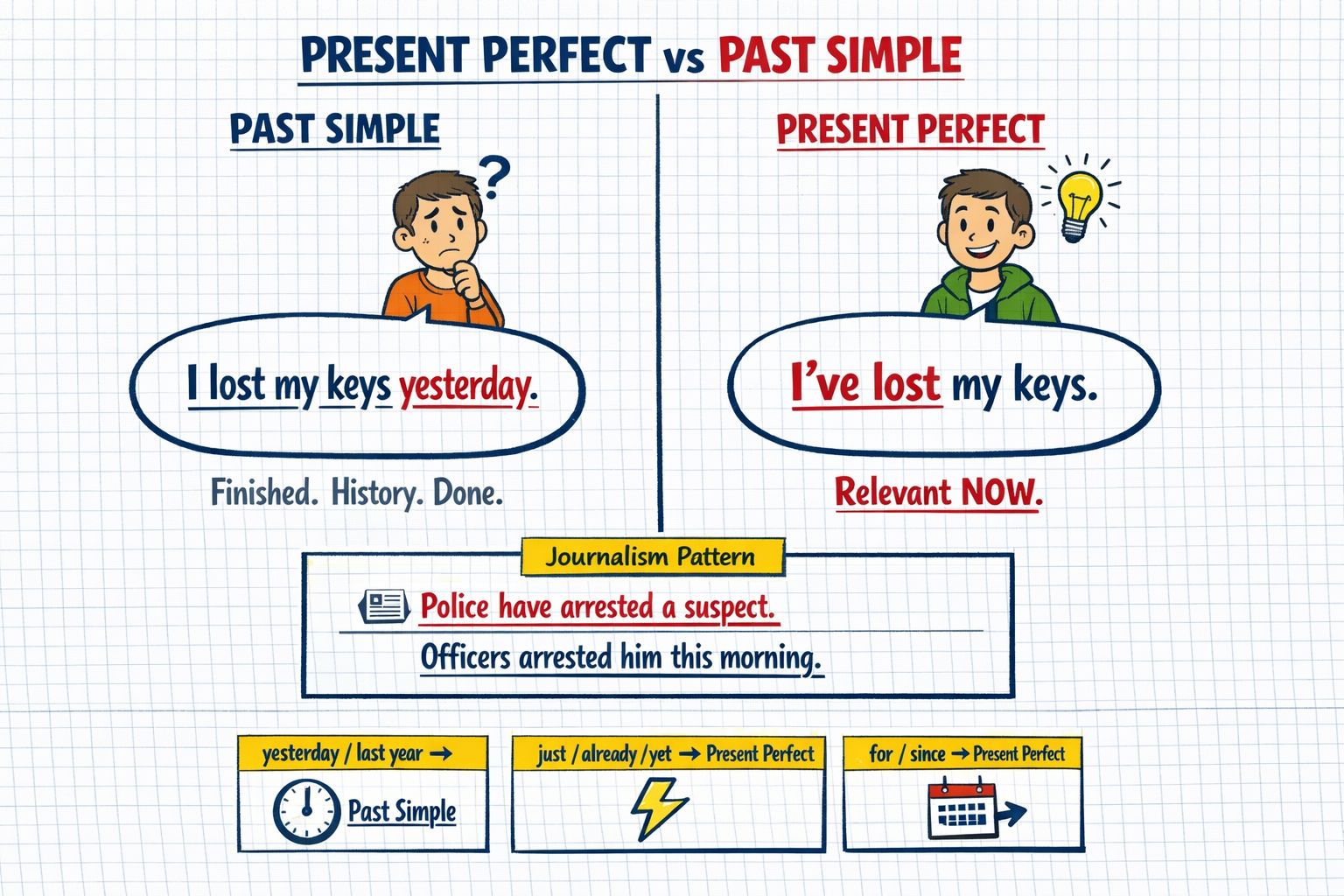
Just with the present perfect means "a moment ago", so you can't add a specific past time like yesterday. If you want to mention yesterday, use the past simple: He called me yesterday.
I didn't finish yet.
I haven't finished yet.
Yet goes with the present perfect, not the past simple.
Quick summary
- Already = it has happened. Yet = it hasn't happened (or: has it?).
- Just: a very short time ago. Between have/has and the verb.
- Already: sooner than expected. Between have/has and the verb (end position only for surprise).
- Yet: only in negatives and questions. Always at the end.
- Always use the past participle, not the base form.
- Don't mix these adverbs with specific past times like yesterday or last week.

Comments